
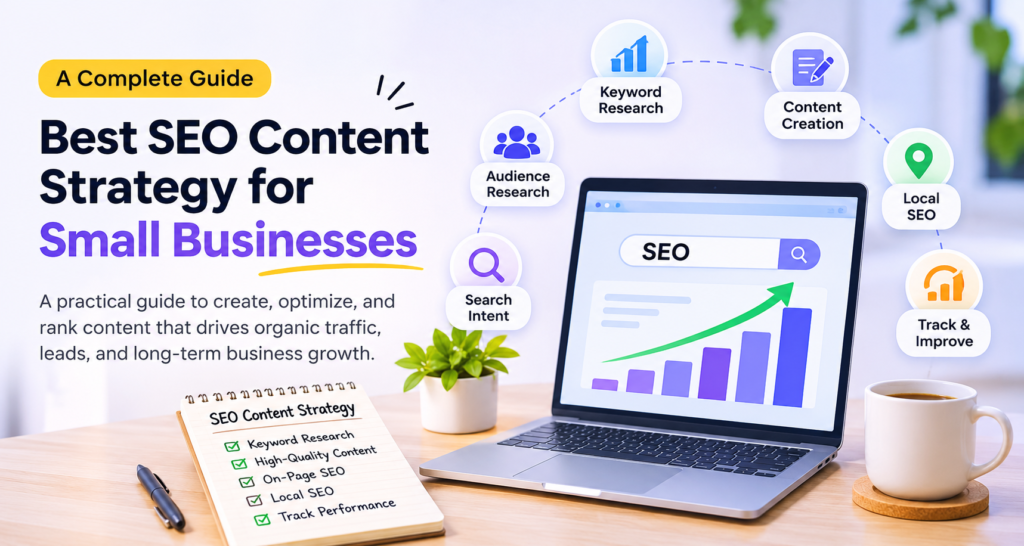
Best SEO Content Strategy for Small Businesses: A Complete Guide to Search Engine Optimization
In today’s digital landscape, simply having a website isn’t enough. Small businesses need a well-planned search engine optimization (SEO) strategy to stand out, attract potential customers, and generate consistent leads. With increasing competition across industries, creating valuable, optimized content is one of the most effective ways to improve online visibility and drive long-term business growth.
This guide explains the best SEO content strategy for small businesses, helping you understand how to create content that ranks higher on search engines while delivering value to your audience.
What is Search Engine Optimization?
Search engine optimization (SEO) is the process of improving your website so it ranks higher in search engine results pages (SERPs). The primary goal of SEO is to increase organic traffic by making your website more relevant, trustworthy, and user-friendly.
SEO involves several elements, including keyword research, high-quality content creation, technical optimization, backlink building, and improving user experience. When these components work together, they help your website gain better visibility and attract qualified visitors.
Why SEO Matters for Small Businesses
Unlike paid advertising, SEO provides sustainable, long-term results. While ads stop generating traffic once your budget runs out, optimized content can continue bringing visitors for months or even years. Here are some key benefits of SEO for small businesses:
- Increases website visibility on search engines
- Drives targeted organic traffic
- Builds credibility and trust
- Generates qualified leads
- Improves brand awareness
- Offers a higher return on investment over time
- Reduces dependence on paid advertising
For businesses with limited marketing budgets, investing in SEO is one of the smartest digital marketing decisions.
What Makes the Best SEO Content Strategy for Small Businesses?
An effective SEO content strategy focuses on creating content that satisfies both search engines and users. Instead of publishing random blog posts, every piece of content should support your business goals and answer your audience’s questions.
Understand Your Target Audience
Before writing any content, identify your ideal customer. Ask questions such as:
- What problems are they trying to solve?
- What products or services are they searching for?
- Which keywords do they use?
- What type of content do they prefer?
Understanding user intent helps you create content that resonates with potential customers.
Perform Comprehensive Keyword Research
Keyword research is the foundation of every successful SEO strategy.
Look for keywords that:
- Have good search volume
- Match your business offerings
- Have achievable competition levels
- Reflect user intent
Instead of targeting only broad keywords, include long-tail keywords such as best SEO content strategy for small businesses because they are more specific and often easier to rank for.
Use keyword research tools like Google Keyword Planner, Ubersuggest, Ahrefs, or Semrush to discover valuable keyword opportunities.
Create High-Quality, Helpful Content
Google prioritizes content that genuinely helps users.
Your content should:
- Answer common customer questions
- Provide practical solutions
- Include accurate information
- Be easy to read
- Offer original insights
Avoid keyword stuffing. Instead, naturally incorporate your target keywords throughout the article while maintaining readability.
Optimize On-Page SEO
On-page SEO helps search engines understand your content. Important optimization elements include:
- Keyword-rich title tag
- Compelling meta description
- Proper heading structure (H1, H2, H3)
- Internal links
- External authoritative links
- Optimized images with descriptive alt text
- Short, descriptive URLs
These optimizations improve both rankings and user experience.
Focus on Search Intent
Not every searcher has the same goal. Search intent generally falls into four categories:
- Informational
- Navigational
- Commercial
- Transactional
Understanding the intent behind your keywords allows you to create content that meets user expectations, increasing engagement and conversions.
Build Topic Clusters Instead of Isolated Articles
One of the best SEO practices is creating topic clusters. Instead of publishing unrelated blogs, create a pillar page around a broad topic like Search Engine Optimization, then support it with related articles such as:
- Local SEO Tips for Small Businesses
- SEO Mistakes Small Businesses Should Avoid
- How to Perform Keyword Research
- On-Page SEO Checklist
- Technical SEO Basics
- Link Building Strategies
Internal links between these articles strengthen your site’s authority and help search engines understand your expertise.
Optimize for Local SEO
Many small businesses serve customers within a specific geographic area. Local SEO strategies include:
- Creating and optimizing your Google Business Profile
- Using location-based keywords
- Collecting customer reviews
- Maintaining consistent business information across directories
- Publishing local content
Local SEO increases your visibility in nearby searches and Google Maps results.
Keep Content Fresh and Updated
SEO isn’t a one-time task. Regularly update existing articles by:
- Adding new statistics
- Improving readability
- Refreshing outdated information
- Including new keywords
- Expanding sections with additional insights
Updated content often performs better than older, outdated pages.
Track Your SEO Performance
Monitoring performance helps identify what’s working and where improvements are needed.
Important metrics include:
- Organic traffic
- Keyword rankings
- Click-through rate (CTR)
- Bounce rate
- Average session duration
- Conversion rate
- Backlinks
Tools like Google Analytics and Google Search Console provide valuable insights into your website’s SEO performance.
Common SEO Mistakes Small Businesses Should Avoid
Many businesses struggle with SEO because they make avoidable mistakes. These include:
- Ignoring keyword research
- Publishing thin or duplicate content
- Keyword stuffing
- Slow website speed
- Poor mobile optimization
- Broken links
- Missing meta titles and descriptions
- Inconsistent content publishing
- Neglecting internal linking
Avoiding these mistakes can significantly improve your website’s search performance.
Conclusion
Developing the best SEO content strategy for small businesses requires more than simply adding keywords to blog posts. It involves understanding your audience, performing effective keyword research, creating valuable content, optimizing every page, and continuously measuring performance.
When implemented consistently, search engine optimization becomes a powerful long-term marketing strategy that increases visibility, attracts qualified traffic, builds trust, and supports business growth. By focusing on quality, relevance, and user experience, small businesses can compete effectively with larger brands and achieve lasting success in search engine rankings.